Sergeant-Air-Gunner Ivor Johns, Killed in Action, Hanover, January 1945
Disgrifiadau
Sergeant-Air-Gunner Ivor Johns and the Hanover Raid: A Kidwelly Airman Lost in Bomber Command’s Final Offensive
On 11 January 1946, The Welshman newspaper carried a heartbreaking notice for the community of Kidwelly: official confirmation had reached Mrs. D. Johns of Gwendraeth Town that her son, Sergeant-Air-Gunner Ivor Johns, previously reported missing, was now presumed killed during a bombing raid over Hanover, Germany.
For a small Welsh town, such losses were deeply personal. Behind the brief obituary was the story of a young RAF airman serving in one of Bomber Command’s most dangerous roles during the final months of the Second World War.
The Final Operation: Hanover, 5–6 January 1945
During the night of 5–6 January 1945, RAF Bomber Command launched one of the largest attacks on Hanover since 1943. A force of 664 aircraft—340 Halifaxes, 310 Lancasters and 14 Mosquitos—attacked industrial targets, railway infrastructure and transport centres vital to Germany’s war effort.
More than 2,000 tons of bombs were dropped, destroying around 3,605 homes and causing widespread devastation. By war’s end, almost 90% of Hanover’s city centre had been destroyed.
The raid came at a heavy price.
German night fighters mounted fierce opposition and 31 RAF bombers failed to return, including 23 Halifaxes. Losses reached nearly 4.7% of the attacking force, a reminder that even in the closing months of the war Bomber Command crews faced deadly odds.
Among those aircraft was the Halifax carrying Sergeant-Air-Gunner Ivor Johns.
Records indicate the bomber crashed at Freilingen, approximately six miles north-east of Wunstorf airfield, during the Hanover operation. Evidence suggests that one member of the crew survived the crash and was captured by German forces, becoming a prisoner of war. The remaining crew, including Sgt. Johns, did not return.
For families at home, such losses often brought prolonged uncertainty. Men were first listed as missing, sometimes for many months, before official confirmation of death was received. For Mrs. Johns in Kidwelly, that confirmation arrived long after the war had ended.
The Dangerous Role of an Air Gunner
As a Sergeant-Air-Gunner, Ivor Johns served as part of the defensive shield protecting his bomber and crew.
On a Halifax Mk III, two specialist gunner positions were normally carried:
* Mid-Upper Gunner
* Rear Gunner (“Tail End Charlie”)
Operating powered turrets fitted with four .303 Browning machine guns, air gunners endured extreme cold, isolation and exhaustion on missions lasting six to ten hours.
Their responsibilities included:
* Watching constantly for German night fighters.
* Warning pilots of attacks and directing evasive manoeuvres.
* Defending the aircraft during combat.
* Protecting the vulnerable rear approach to the bomber.
* Remaining alert during take-off and landing.
The rear gunner, separated from the crew in the tail section, was especially vulnerable. In emergencies, escaping from the turret and reaching a parachute could be desperately difficult.
Many gunners completed dozens of sorties without firing a weapon. Yet every operation carried the possibility that they might never return.
Remembering Ivor Johns
When The Welshman printed news of Sgt. Johns’ presumed death in January 1946, it described him as “highly popular in Kidwelly.” The community’s sympathy was extended to his family, who had endured months of uncertainty.
Today, through family research and preserved records, his story emerges more clearly: a young Welsh airman lost during one of Bomber Command’s final major offensives, his aircraft falling near Freilingen while returning from the attack on Hanover.
Special thanks are due to Albert Ivor’s son Richard and the family of the late Ivor Johns for providing information that helped trace their family history. Ivor was named after Sergeant-Air-Gunner Alfred Ivor Johns, ensuring that his memory continues across generations.
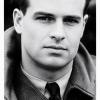
Image:Sergeant-Air-Gunner Ivor Johns
(Article created by Mr Garry Smith)

More items with these tags
Related items


Cysylltwch â Ni
I wneud cais i dynnu i lawr neu riportio cynnwys hiliol, sarhaus neu niweidiol mewn unrhyw ffordd arall.
You must be logged in to leave a comment