Stori Amanda
Disgrifiadau
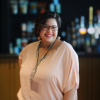
My name is Amanda, and I’ll never forget the day everything changed September 24th, 2021 24th, 2021. That was the day we landed in London, just the three of us: my husband, our baby daughter Isabella, and me. We had left behind our life in El Salvador—our home, our business, everything we knew—packed into two suitcases and carried across oceans with only hope to keep us going.
Back in El Salvador, I had a degree in hospitality and tourism. I worked in hotels, and later my husband and I started our own travel agency. Life wasn’t perfect, but we were doing okay. Then things shifted. The situation in our country made it impossible to stay. It was dangerous. Unstable. We made the heart breaking decision to leave the only home we’d ever known and start over somewhere safer.
The journey here wasn’t physically hard—we took a plane, stopping briefly in the U.S.—but emotionally, it was the most difficult thing I’ve ever done. Sitting on that flight, holding my baby, I kept thinking: I may never see my home again. That realization hit me so hard. There’s no way to prepare for it.
When we arrived in London, we stayed in a hotel for eight months. We didn’t expect it, but during that time I found out I was pregnant again. I had such mixed emotions—joy and fear, all mixed together. We were in one small room, just the three of us, far from family, trying to navigate a new world in a foreign language.
Those months were full of uncertainty. The Home Office moved us 13 or 14 times. With babies. Each time, it felt like we were starting from scratch. People said, “It’ll be easier because you have children,” but that wasn’t our reality. We lived in emergency accommodations, shared spaces with strangers, no privacy, no stability. And always the fear of: What’s next? Where will we go tomorrow?
Still, we were grateful. Because we had each other. And because, during all that hardship, we met people I now call angels—people who helped us with the small things that felt huge: finding a GP, enrolling in school, understanding how the bus worked. They made such a difference.
And then we were moved to Wales, the place that would become our home. I remember the moment we arrived in Wales. My heart was full—of hope, of fear, of questions. We had left behind not just a country, but a life. Friends, family, the food, the beach… all those little things that make you feel like you belong. And yet, deep inside, I knew we weren’t starting from zero. You never start again. You just… continue. You carry everything with you. Your experiences, your strength, your memories—they come with you.
At first, everything felt so unfamiliar. The culture, the language, the weather (oh, the cold!), even the food. I could see the same fear and uncertainty in the eyes of others who, like me, had made that brave decision to move across the world. Some came with disabilities, some with children, some with trauma. All of us came with dreams.
But we were introduced to some beautiful people who helped get us involved in the community through different organizations. They supported us and encouraged us and really helped us settle in. We received a warm welcome from the Welsh people which was special.
Language was one of the biggest challenges. I’d studied English back home, but it didn’t prepare me for the way people actually speak here. At first, I couldn’t understand anything. I’d write, but I couldn’t speak. I’d hear someone talk and freeze. But slowly, with time, we learned. My husband and I made a plan—we’d learn like children do: listen, speak, repeat, make mistakes, and keep going.
We made it a rule that outside of home, we only speak English. Now, Isabella speaks all three—English, Welsh, and Spanish. I’m so proud of her. I always tell her, “If you hear someone struggling in Spanish, help them. Be kind.” Because that’s what we needed, and that’s what we received.
There have been some really tough times as well.We experienced a hate crime once, on the bus, with our children there. Someone shouted at us in English—angry words we barely understood, but we felt their meaning deeply. It was terrifying. But even then, the community around us stepped up. They supported us, comforted us, reminded us that not everyone is like that. And it’s true. We’ve made incredible friends from Wales and all over the world. Some are even learning Spanish because of us.
I’ve come to believe that diversity is a strength. We need to build a community that includes everyone—not just Welsh or Latin American or African—but all of us, together. That’s the kind of world I want my children to grow up in.
Starting a new career here wasn’t easy either. When you leave everything behind and carry your life in two bags, it takes time to recover. And without support, that recovery can take years. I had to rediscover who I was—not just a mother, but Amanda: a professional, a woman with dreams.
We were lucky to find help from EYST, a support organisation for asylum seekers and refugees. I remember the first time I went there, nervous and barely able to communicate. But a kind volunteer took the time to listen. She gave us bus tickets, school information—everything. I told her, “The work you do is powerful. One day, I want to work here.” She smiled and said, “Why not? Maybe in the future.”
That future came faster than I expected.
I began volunteering at EYST—answering phones, helping at the front desk, doing anything I could. It was challenging, especially understanding different accents and trying to bring my energy, my sabor, into English. But every time I showed up, I felt more like myself again.
Then one day, I saw a job posting: Employment Support Officer. I doubted myself, thinking, What does hotel and tourism have to do with this? But I remembered something—I used to run community workshops at my church back home for people living in poverty. I supported adults and young people in music, beauty, sport… and English.
So I applied. During the interview, I told that story. And it was that story, that experience, that got me the job.
Through my work I started meeting people from Syria, from Afghanistan, from many places, and I noticed something: everyone was seeing only the problems. “I don’t speak English.” “I don’t know how to find work.” “I’ll never belong.” And I would say, “No, look. You have this skill. You speak that language. You’ve already survived so much. That’s not nothing. That’s everything.”
I began writing down their abilities, not their challenges. I’d say, “You are bilingual. You are resourceful. You are a mother, a builder, a teacher. You just need to translate your skills into this new context. And to do that, yes—you need English. But that’s just one step.”
People would say, “Amanda, thank you. I never saw it like that.” And I’d think, You didn’t see it because no one showed you how.
But I listened. That’s all people want, really. To be heard. I listened to what they lost—and I helped them see what they still had. Then we’d plan together. How can you get certified? How can you keep growing?
I love being able to support others who are just starting their journey, just like I did. Many don’t speak English. Many are overwhelmed. But I tell them, You can do this. Because I did. And I know how powerful a little hope—and a little help—can be.
This journey has tested everything in me. But it has also taught me so much. I’ve learned that starting over isn’t the end. It’s a beginning. And today, I feel more alive, more myself, than I ever imagined possible.
Because I’ve been there too. I studied tourism and hospitality back home. I had to fight to get my degree recognised. It’s not easy. But I met beautiful people on the way, and they helped me. That’s why I mentor now. That’s why I go to conferences and share what I’ve learned—because someone once opened a door for me.
What I’ve learned in this journey is that pity doesn’t help anyone. Empathy does. Empathy says: “I see your pain—but I also see your potential.” That’s powerful.
You know, when I was growing up in El Salvador, my father always said, “Baby, everything in life has a solution—except death.” That stayed with me. When we came to Wales, I carried that wisdom. I teach it to my children. If one day we have to move again, we’ll pack our essentials and go. Not because we’re starting over, but because our story continues.
One of my most special memories here relates to one of my biggest passions —dance! I love it. Salsa, Afrobeats, samba. I started offering well-being sessions through dance. I was nervous—my English wasn’t perfect. But you know what? People loved it. They didn’t care about my accent. They felt safe. They felt joy. One woman told me, “Amanda, I’ve tried many dance classes. But no one had your patience.”
Another lady, older, said she waited the whole week just to come to my session. Do you know how powerful that is? That someone sees your energy as healing? That’s not something money can buy.
Eventually, I was teaching in Swansea, then Llanelli, then Carmarthen. Moving around, spreading joy, helping others feel confident in their bodies again. It reminded me: it’s not about being perfect—it’s about being present. Creating safe spaces where people can be free, even for an hour.
And that’s the thing. When you lose your job, your language, your money… it can feel like you’ve lost your soul. But when you work hard and buy your first thing with your own money—even if it’s just a small drink—it gives you power. It reminds you of who you are.
That’s what I want for others too. I want people who come to Wales to feel they belong. And not just with kind words or handouts—but with opportunities. The Welsh people have beautiful hearts. I’ve seen it. When they sit with you, drink coffee with you, ask how you are—they’re saying, “You matter.”
We are not strange. We are not foreign. We’re human. Two eyes. One heart. Blood that runs red. Just like you.
My dream? That every migrant, every refugee, every displaced person, finds belonging. That they meet someone who looks them in the eye and says, “Welcome. You’re not alone.” That they believe again. In themselves, in the future, in possibility.
Because it is possible.
Here, I’ve seen people get certified. I’ve seen them learn English, build businesses, volunteer, make friends. But it starts with belief. You must believe in yourself. And if you can’t, find someone who does—until you can.
So this is my story. Not one of loss, but of continuation. Of building something new without forgetting where I came from.
And I will never stop dreaming.

Mae'r eitem hon hefyd yn ymddangos yn

Cysylltwch â Ni
I wneud cais i dynnu i lawr neu riportio cynnwys hiliol, sarhaus neu niweidiol mewn unrhyw ffordd arall.
You must be logged in to leave a comment